🌍Introduction
Plastic pollution has evolved from a waste management issue into a global environmental and economic crisis. Each year, millions of tons of plastic enter marine ecosystems, disrupting biodiversity, damaging fisheries, and threatening human health.
If immediate action is not taken, the long-term consequences will extend beyond environmental degradation — affecting global food security, public health, and economic stability.
📊The Scale of the Problem
Research estimates that 8–12 million metric tons of plastic waste enter the oceans annually. Today, approximately 75–199 million metric tons of plastic already circulate within marine environments.
Key sources include:
Single-use plastic bags
Packaging materials
Plastic bottles
Fishing gear and nets
Unlike organic materials, plastic does not biodegrade. Instead, it fragments into smaller particles known as microplastics, persisting in the environment for hundreds of years.
Join the Plastic-Free Movement
🐢Impact on Marine Life
1. Ingestion and Starvation
Marine animals frequently mistake plastic debris for food. Sea turtles consume plastic bags, seabirds ingest microplastics, and fish absorb plastic particles. This leads to:
Internal injuries
Blocked digestive systems
Starvation
Death
Studies indicate that up to 90% of seabirds have plastic in their digestive systems.
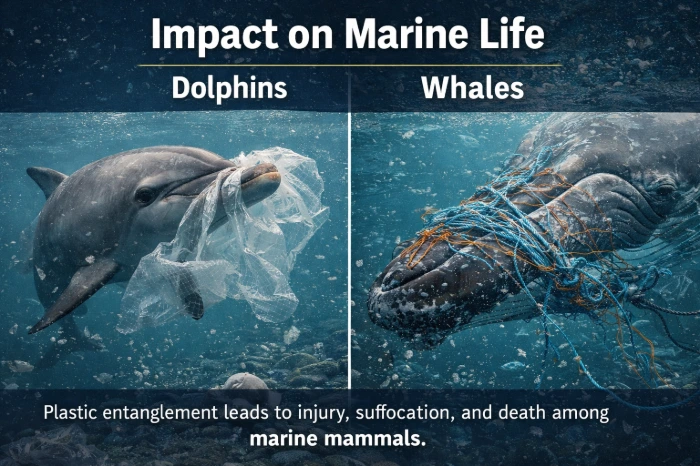
2. Entanglement
Discarded fishing nets and plastic waste entangle:
Dolphins
Whales
Seals
Sea turtles
This results in injury, drowning, and reduced mobility, directly affecting marine biodiversity.
3. Ecosystem Disruption
Coral reefs — which support approximately 25% of marine species — are increasingly exposed to plastic debris. Plastics can introduce pathogens and increase disease prevalence in coral systems, weakening entire marine ecosystems.
🔴Protect Tomorrow, Starting Today.
🧬Microplastics and Human Health
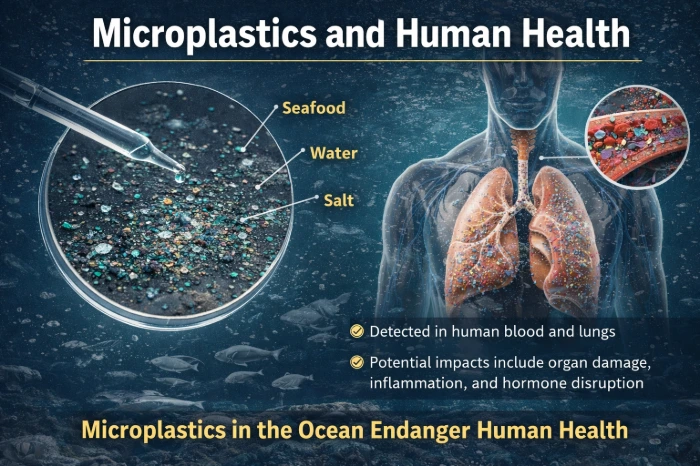
Plastic waste does not remain confined to the ocean. Over time, it breaks down into microplastics that enter the marine food chain.
Microplastics have been detected in:
Seafood
Drinking water
Sea salt
Human blood samples
Although long-term health impacts are still under study, potential risks include hormonal disruption, inflammatory responses, and toxin accumulation.
Plastic pollution is no longer just an environmental issue — it is a human health concern.
📈Economic Consequences
The financial implications are significant:
Fisheries experience reduced yields
Coastal tourism declines in polluted areas
Governments face high clean-up costs
Marine pollution directly impacts livelihoods, particularly in countries dependent on fishing and coastal industries.
Be the Change Our Oceans Need.
🕴What Happens If We Do Not Act?
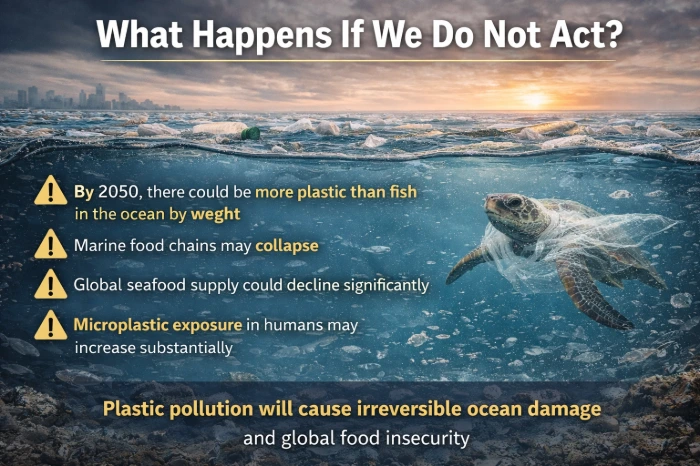
If plastic consumption continues at current levels, projections suggest:
By 2050, oceans could contain more plastic than fish by weight.
Marine food chains may collapse.
Global seafood supply could decline significantly.
Microplastic exposure in humans may increase substantially.
The environmental damage would be irreversible in many regions.
🌍Global Progress: Shifting Away from Plastic
There are signs of progress:
Multiple countries have implemented plastic bag bans.
In regions like the UK, plastic bag charges reduced beach plastic litter by nearly 80%.
Consumers are increasingly choosing reusable alternatives.
However, widespread adoption is still required at both consumer and industrial levels.
The Role of Sustainable Alternatives
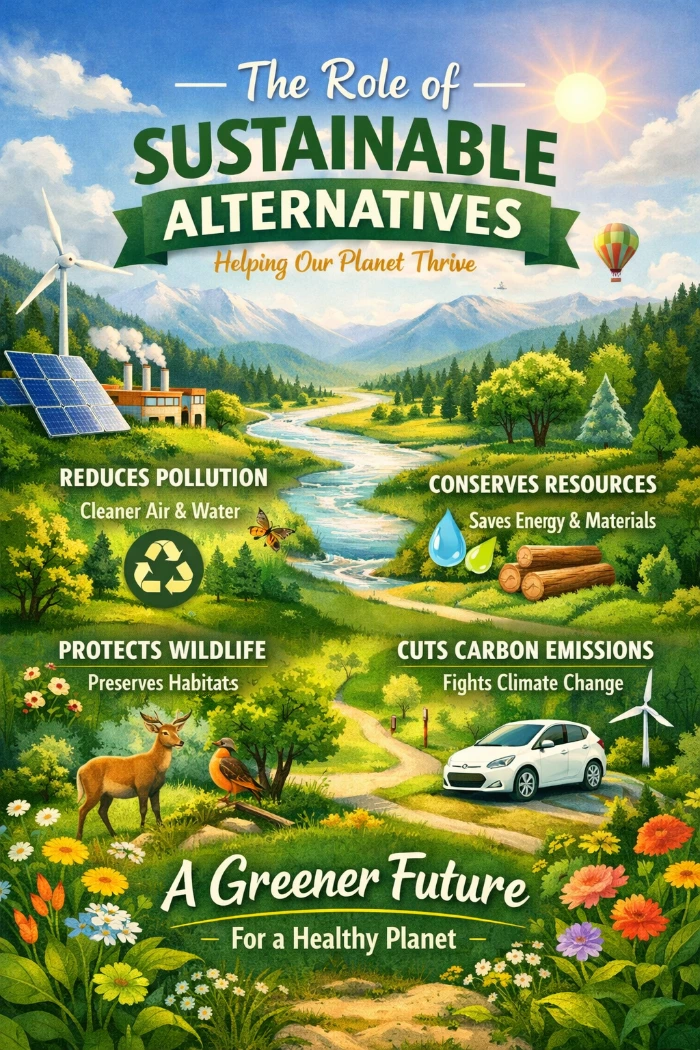
Transitioning to eco-friendly materials is a critical solution.
Jute Products
100% biodegradable
Decompose within months under natural conditions
Reusable and highly durable
Compostable, contributing organic matter back to soil
Jute cultivation also has environmental advantages:
Requires relatively low chemical input
Improves soil structure
Enhances soil fertility through organic residue
Bamboo Products
Rapidly renewable resource
Grows without intensive pesticides
Biodegradable
Supports soil stability and prevents erosion
Unlike plastic, natural fiber products return to the ecosystem without leaving toxic residues.
Interested in eco-friendly jute or bamboo products? Contact us now to discuss your requirements and get a customized quote.
Together for a Plastic-Free Planet.
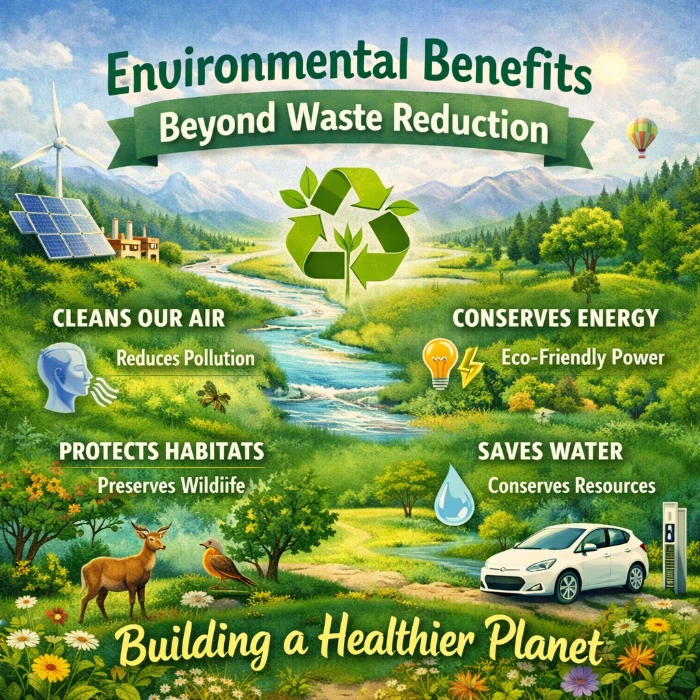
Environmental Benefits Beyond Waste Reduction
When eco-friendly products such as jute and bamboo replace plastic:
Soil quality improves through organic decomposition
Land productivity increases
Carbon footprint is reduced
Waste accumulation decreases
Sustainable materials contribute to a circular economy rather than a linear “use and discard” model.
Have questions or looking for bulk eco-friendly products? Contact us today — our team is ready to assist you.
Lead the Shift Away from Plastic
The evidence is clear: plastic pollution is damaging marine ecosystems, threatening human health, and destabilizing economies.
Businesses, consumers, and governments must act collectively.
✔ Reduce single-use plastic consumption
✔ Adopt reusable and biodegradable alternatives
✔ Support sustainable supply chains
✔ Invest in eco-friendly materials such as jute and bamboo
The transition toward sustainability is not optional — it is essential for long-term environmental and economic resilience.
For wholesale inquiries, export partnerships, or custom orders, feel free to contact us. We respond within 24 hours.
Frequently asked questions
Here are some common questions about our company.
We manufacture and export eco-friendly jute bags, canvas bags, bamboo products, and sustainable packaging solutions for international markets.
Yes, we specialize in bulk manufacturing and export orders. Please contact us for minimum order quantity (MOQ) details.
Yes, we offer custom printing and private labeling services according to your brand requirements.
Yes, our jute and bamboo products are biodegradable and environmentally friendly, making them excellent alternatives to plastic.
We export globally, including the USA, UK, Europe, Australia, and other international markets.
Production time depends on order quantity and customization, but typically ranges between 15–30 days.
Yes, sample orders are available upon request. Contact us for details.
You can contact us through our website, email, or WhatsApp to discuss your requirements and receive a quotation.

